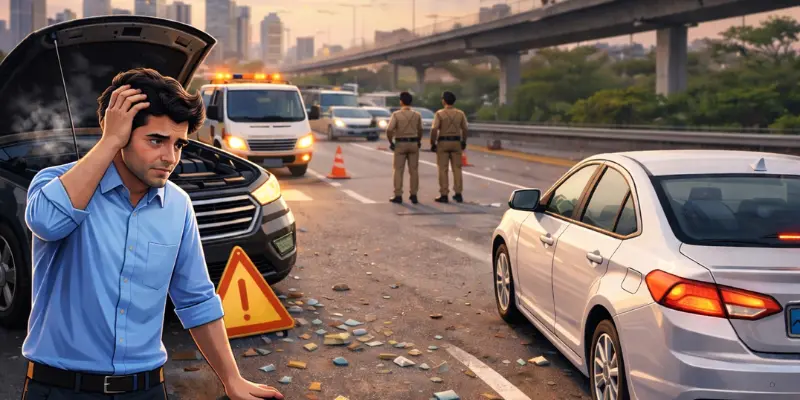
Breakdown Accident Liability: Who Is Responsible?
A car breakdown is stressful on its own. But when that breakdown triggers an accident another vehicle collides, traffic piles up, or someone gets injured the situation becomes far more complicated. One question immediately comes up: who is actually responsible?
The answer is not always straightforward. Responsibility depends on intent, actions taken after the breakdown, road conditions, and whether safety rules were followed. This article breaks it down clearly, without legal jargon, so vehicle owners and travellers can understand where liability usually falls and how to protect themselves.
When a Breakdown Turns Into an Accident: The Legal Grey Zone
A breakdown is typically considered an unintentional mechanical failure. An accident, however, involves damage, injury, or loss. When the two overlap, authorities look closely at human behaviour after the breakdown rather than the breakdown itself.
In simple terms, the law usually asks:
- Was the breakdown unavoidable?
- Did the driver act responsibly after the vehicle stopped?
- Were other road users negligent or speeding?
Liability is rarely automatic. It is assessed based on what happened after the vehicle became immobile.
Understanding Responsibility: It’s About Actions, Not Just Failure
Mechanical Failure Alone Rarely Creates Liability
If a car stalls due to a sudden engine failure, electrical issue, or tyre burst, the driver is generally not automatically at fault. Mechanical failures happen—even in well-maintained vehicles.
However, responsibility can shift if:
- Warning signs were ignored for days
- The vehicle was knowingly unsafe
- Mandatory maintenance was skipped
Negligence before the breakdown matters.
What the Driver Does Next Changes Everything
This is where most liability cases are decided.
If a driver fails to:
- Move the vehicle off the active lane (if possible)
- Turn on hazard lights
- Place a warning triangle
- Call for assistance promptly
then the breakdown may be treated as contributory negligence. That means the driver shares responsibility for any resulting accident.
On busy Indian roads, even a few minutes of inaction can be considered risky behaviour.
Different Accident Scenarios and Who Is Usually Liable
Rear-End Collision Into a Broken-Down Car
If another vehicle crashes into a stationary broken-down car, liability often depends on visibility and warning measures.
- If hazard lights were on and the car was visible, the moving vehicle may be at fault.
- If no warnings were given and the car was poorly positioned, responsibility may be shared.
Multi-Vehicle Pile-Ups
In chain collisions caused by a stalled vehicle, investigators usually assess:
- Distance maintained by following vehicles
- Speed
- Whether the stalled car was properly marked
Responsibility may be distributed among multiple drivers.
Highway Breakdowns
Highways impose stricter expectations. A driver who fails to place reflective triangles or inform authorities can face greater liability due to higher risk and speed.
Where Insurance Fits Into the Picture
Motor insurance does not automatically deny claims because a breakdown occurred. However, insurers carefully review post-breakdown conduct.
Claims may be reduced or rejected if:
- Safety precautions were ignored
- The vehicle was illegally parked after breakdown
- Alcohol or reckless driving was involved
Third-party insurance typically covers damages to others, but personal liability can still arise in serious negligence cases.
A Realistic Example from Indian Roads
Imagine a car stalls during evening traffic on a flyover. The driver steps out but does not turn on hazard lights. Within minutes, a two-wheeler crashes into the back of the car.
In this case:
- The breakdown itself is not the issue
- Failure to warn other road users becomes the deciding factor
- Liability is likely shared between the stalled car driver and the rider, depending on speed and visibility
This is how most real-world cases are judged on behaviour, not bad luck.
Common Myths That Confuse Drivers
One common belief is that “if my car broke down, it’s never my fault.” That is not always true. Another myth is that switching on hazard lights alone is enough. On highways or poorly lit roads, additional warnings are expected.
Many drivers also assume insurance will “handle everything.” Insurance helps—but legal responsibility can still exist separately.
How to Protect Yourself Legally During a Breakdown
The safest approach is simple: act immediately and visibly. Move the vehicle away from traffic if possible. Use hazard lights, reflective triangles, and stay away from the road edge. Call professional roadside assistance instead of relying on passersby.
These actions not only improve safety but also demonstrate responsible conduct if liability is later questioned.
Why Professional Roadside Assistance Matters
Quick, professional response reduces the window of risk. Documented call logs, GPS tracking, and rapid clearance of the vehicle can help establish that the driver acted responsibly.
In legal terms, doing the right thing quickly often makes the biggest difference.
Responsibility Is Shared, Not Assumed
When a breakdown causes an accident, responsibility is rarely black and white. It depends on preparation, reaction time, and adherence to safety norms. Drivers who act responsibly are far less likely to face legal or financial trouble even when accidents occur.
If you drive regularly, understanding this distinction is just as important as knowing traffic rules.
FAQs
Q: Is a driver always at fault if their breakdown causes an accident?
A: No. Fault depends on actions taken after the breakdown, visibility, and whether safety precautions were followed.
Q: Can insurance reject a claim if a breakdown leads to an accident?
A: Insurance may reduce or reject claims if negligence is proven, such as ignoring safety warnings or illegal parking.
Q: Who is responsible if another vehicle hits a broken-down car from behind?
A: Responsibility depends on warning measures, visibility, and whether the moving vehicle maintained safe distance.
Q: Does placing hazard lights remove all liability?
A: Not always. On highways or low-visibility areas, additional warnings like reflective triangles are expected.
Q: Should I move my car after a breakdown even if it’s risky?
A: Only if safe. If moving increases danger, warn other drivers immediately and call roadside assistance.